
NIDELVEN RUSH


– A team-driven game development project –
Challenges & solutions
Process and development
Result
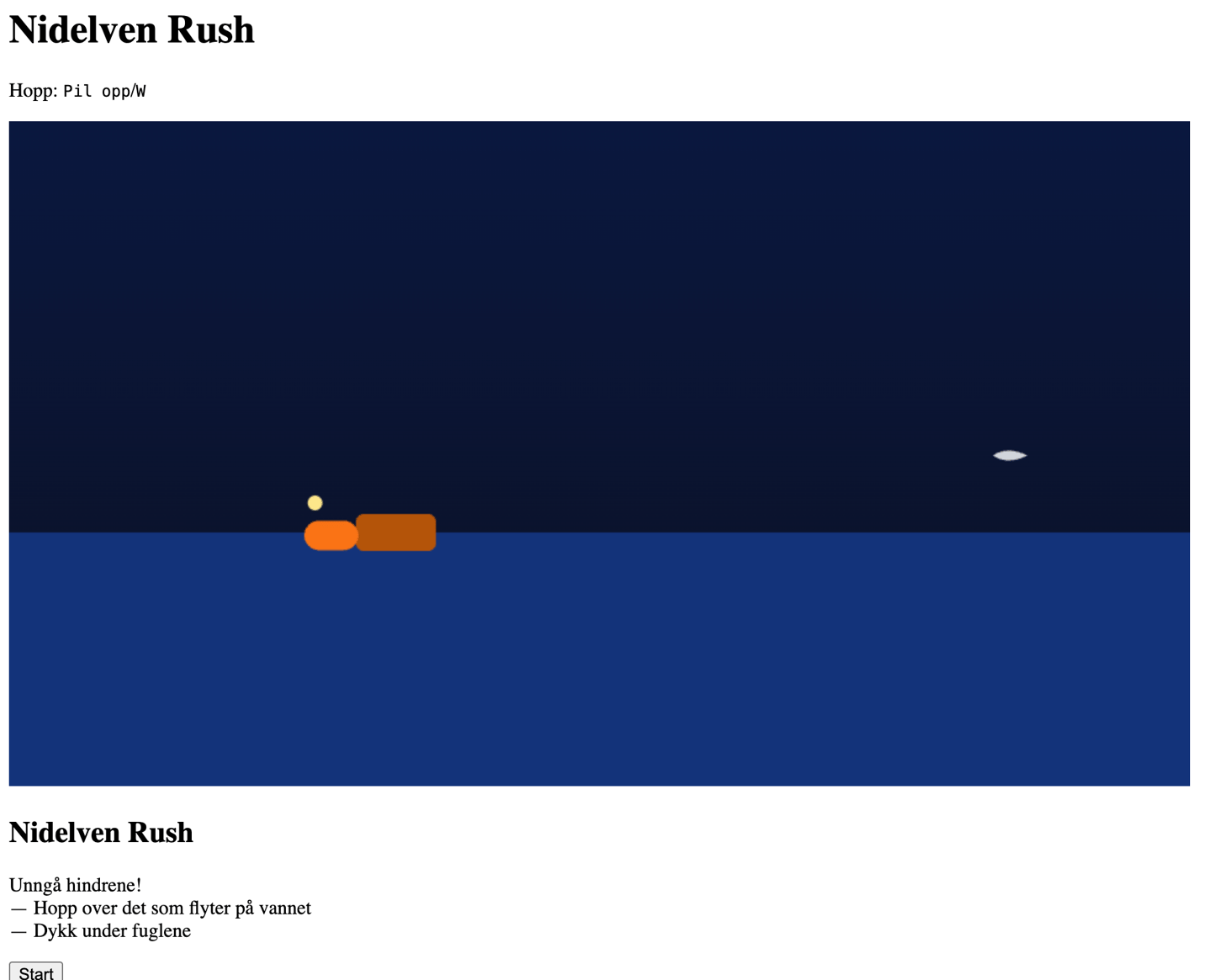
We encountered challenges with image paths and scaling. The solution was to gather all PNG files into a single, well-structured directory and load them consistently from there.
Spent too much time learing CSS keyframe-animation and became overly detail-focused in retrospect. While gaining experience with spritesheets was valuable, it led to clearer prioritization decisions later in the project.
Overview
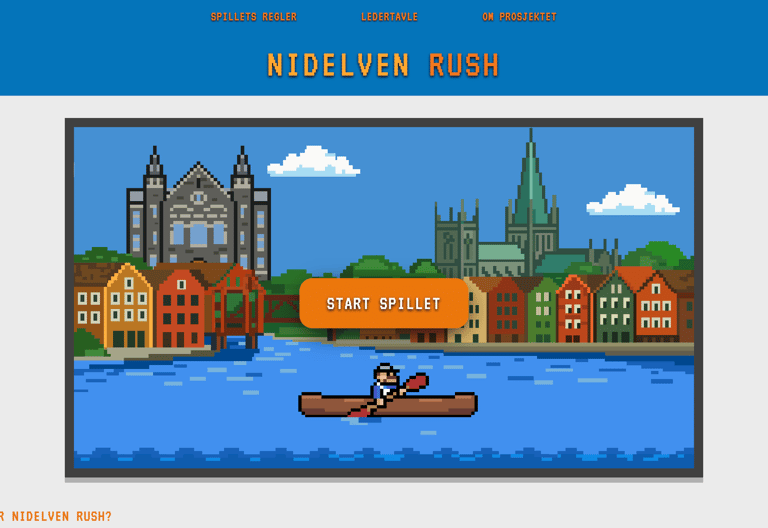
Nidelven Rush is a pixel-art endless runner in which the player paddles a kayak down the Nidelva River, avoiding obstacles along the way to collect points.
Develop a game as a team within a tight timeframe. The challenge was to find a concept that was realistic to execute while still allowing room for learning and collaboration.
Build a simple, playable browser game while learning fundamental front-end development. The project was required to result in a fully functioning product with both a website and an embedded game — not just a prototype.
We deliberately limited the technology stack to ensure feasibility, building the game using plain HTML, CSS, and JavaScript. The gameplay was simplified to one clear core action: jumping to avoid obstacles.
Task
Goal
Solution
An early prototype was used to test game flow and core logic such as gravity, collisions, and score calculation.


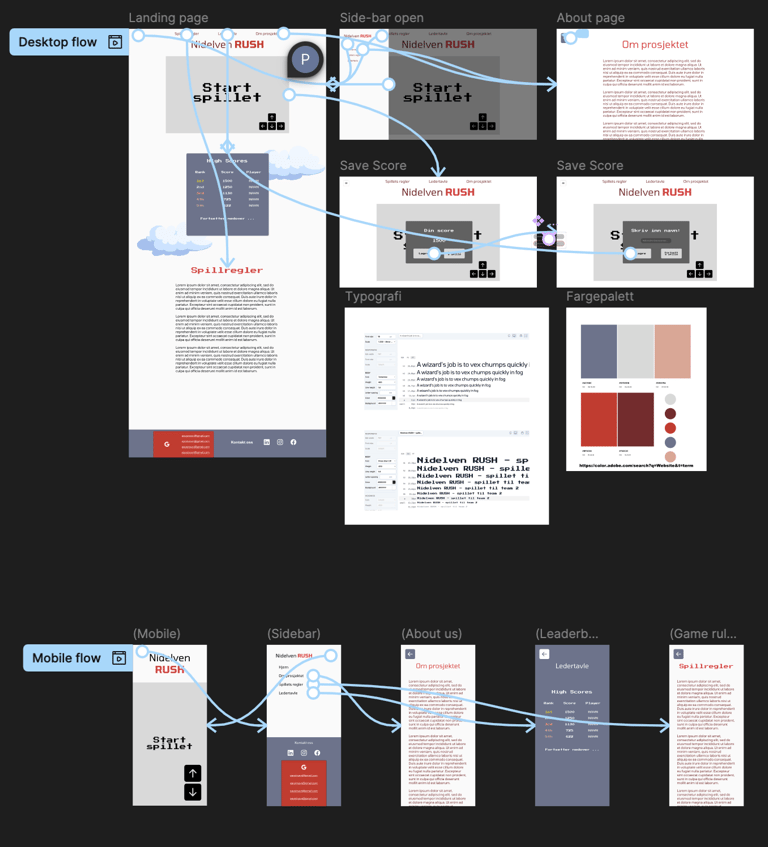
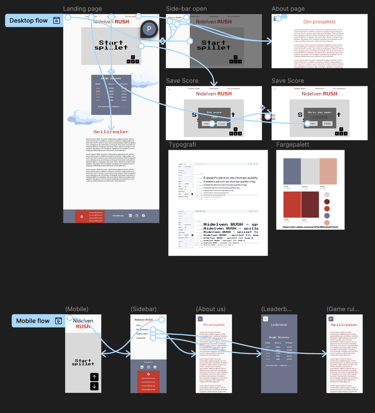
Figma was used to define the structure, flow, and visual direction prior to implementing the website that would host the game interface. The prototype served as a shared reference point for the team.
Bootstrap was used early in development to maintain a responsive layout, the solutions were further refined and quality-assured based on the Figma prototype, adapted for different screen sizes.
File handling
Tidsprioritering
Constraints
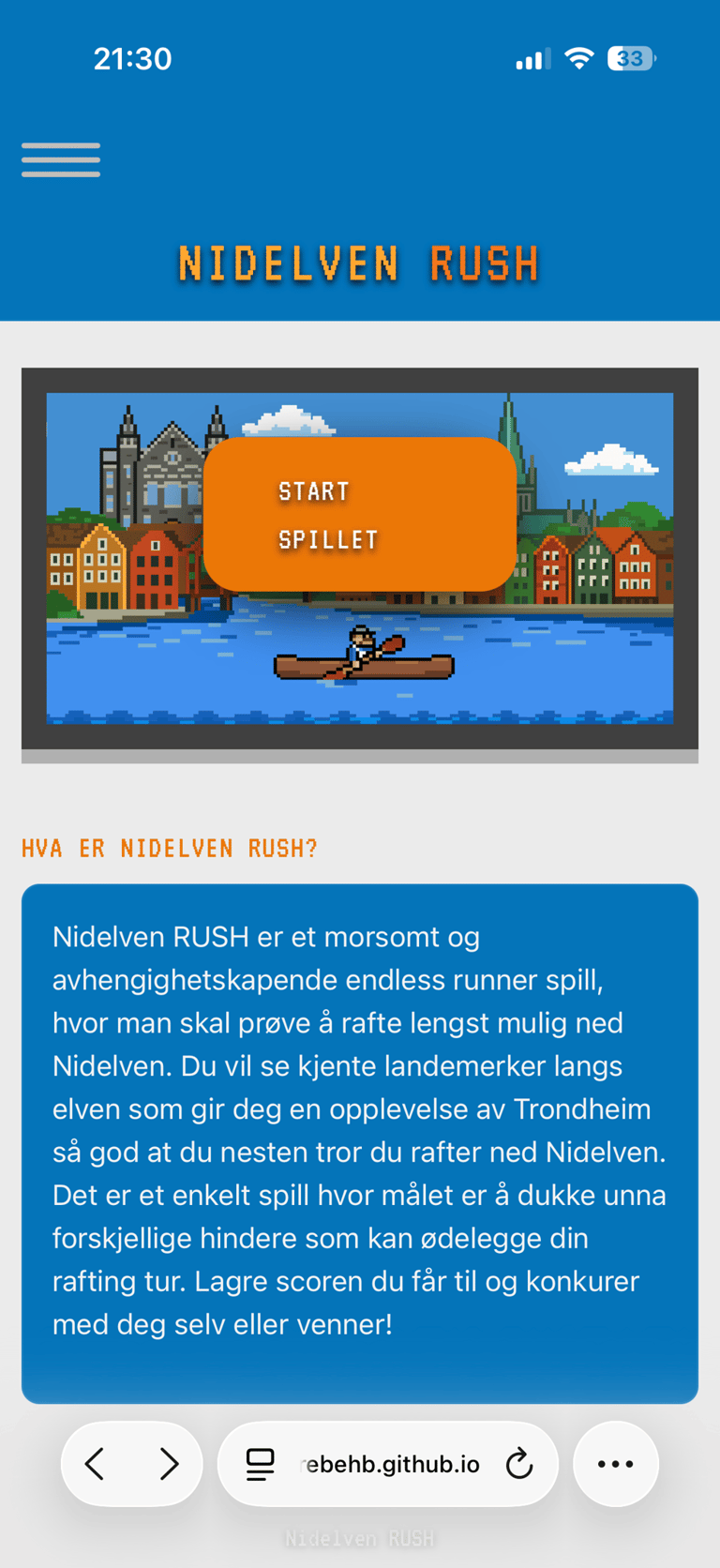
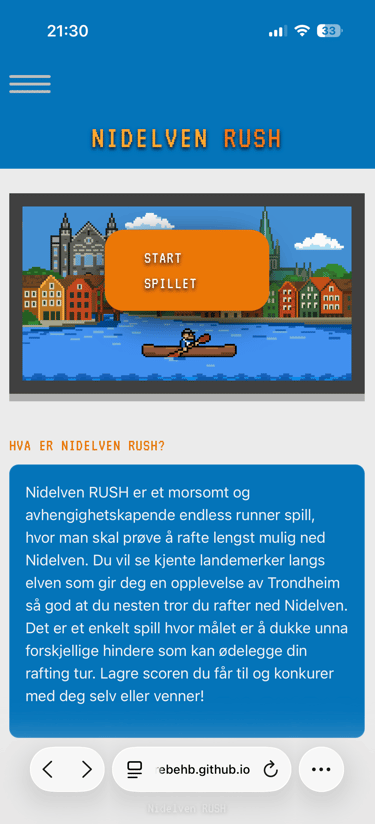
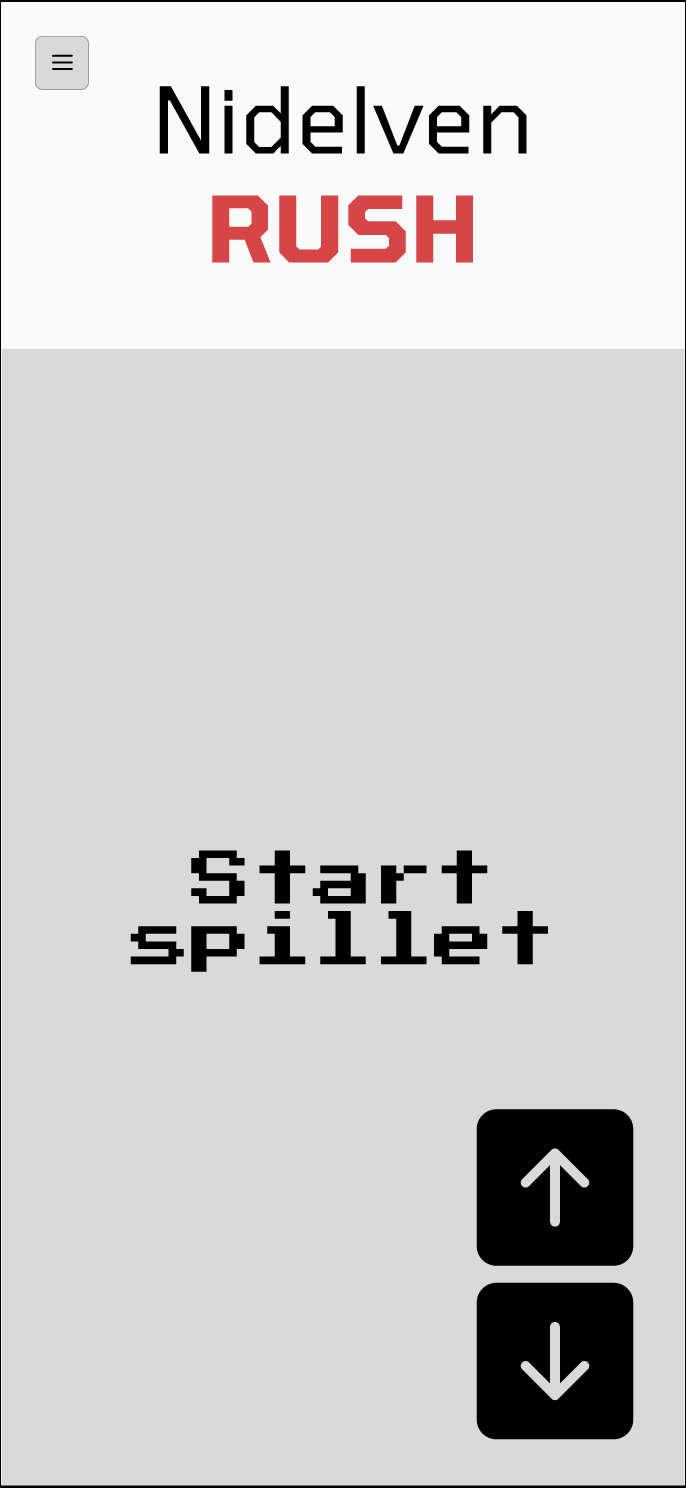
Mobile prototype – planned solution


A limited technology stack introduced challenges related to both animation and score persistence. These were addressed by simplifying functionality and implementing a local high-score table using JSON and localStorage.
Example of spritesheet animation logic, an industry standard for creating data-efficient animations. The process provided insight into the possibilities and limitations, but a clear time drain.
Who would have thought that getting a character to jump over obstacles on a screen would take around 300 hours of work—but that is, in fact, what went into something that may appear so simple.
The result can be played in just a few minutes. The greatest value lay in understanding the constraints and making sound decisions throughout the team project Nidelven RUSH.



Spritesheet av en måke med 6 animasjons-frames i ett sammenhengende sheet.
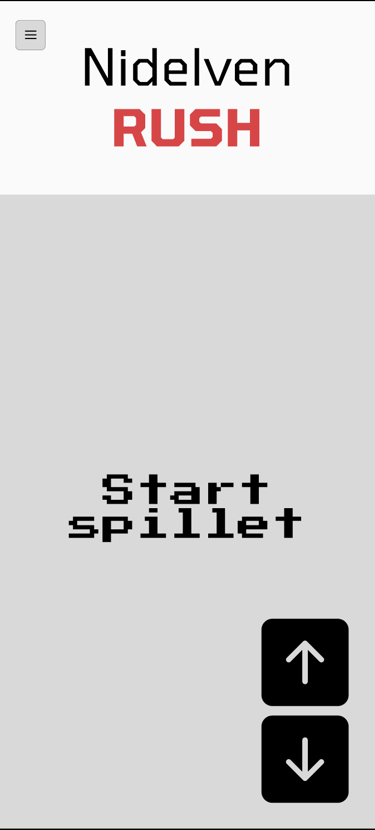
Implemented mobile interface